Operating models align governance, decision rights, and service delivery with the capabilities needed for consistent performance.

We design operating models that translate enterprise strategy into disciplined execution, creating clarity at the executive level and consistency across functions, regions, and services.

Operating models only deliver value when they are designed for execution - not just structure.

Applied across complex, multi-stakeholder transformations spanning public sector, energy, and enterprise environments.

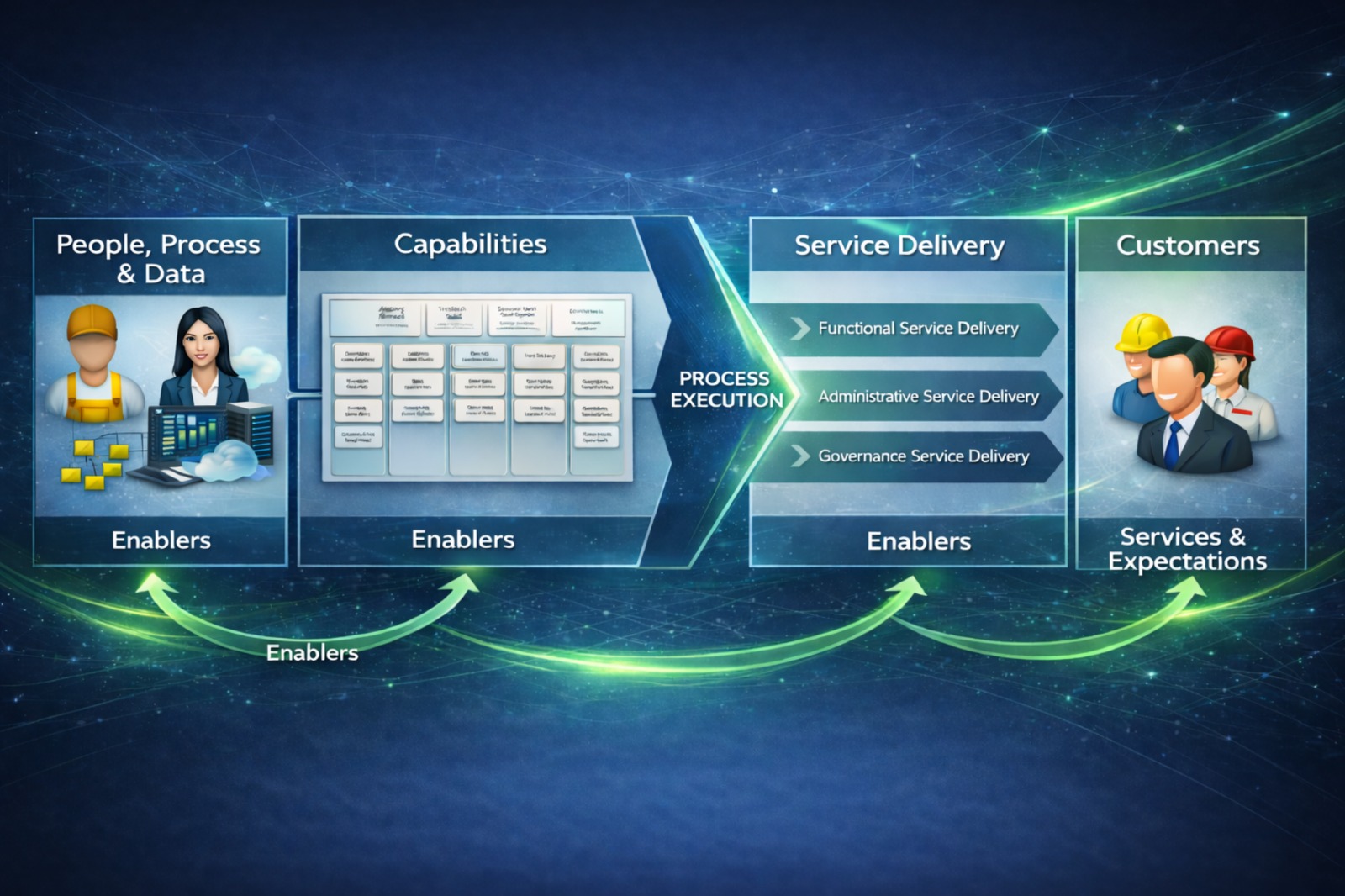
Operating Model Structural Components - People, Process, Data, Capabilities, Service Delivery

Operating model components and the enabling chain from capabilities to service delivery.
How the Operating Model Creates Value

Operating models convert strategy into execution by aligning governance, capabilities, and service delivery.

Why it matters: operating models fail when service delivery changes without aligning underlying capabilities. We ensure the full chain connects—so governance, decision rights, and performance measures reinforce execution.

What we design: clear service boundaries, accountable owners, capability requirements, and routines (KPIs, SLAs, forums) that sustain performance.

What's Included

  • Operating model principles and strategic alignment
  • Enterprise service delivery model design
  • Governance structure and decision rights clarity
  • Functional vs. administrative service segmentation
  • Capability model (people, process, data, technology)
  • Performance measures (KPIs, SLAs, leading indicators)
  • Transition roadmap and executive alignment
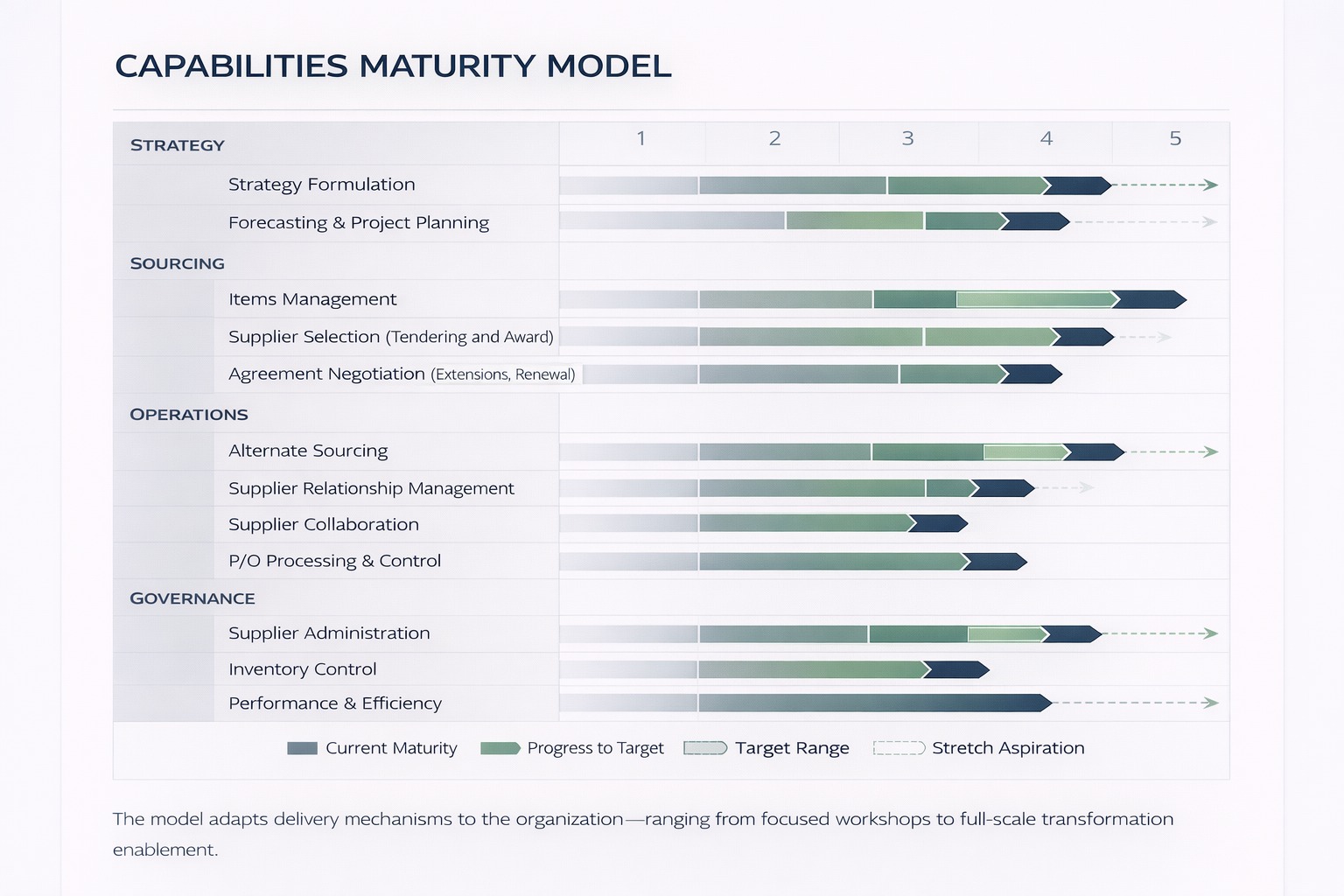
Capabilities Maturity Model

Example maturity calibration across core enterprise capabilities.
How Operating Model Design Is Delivered

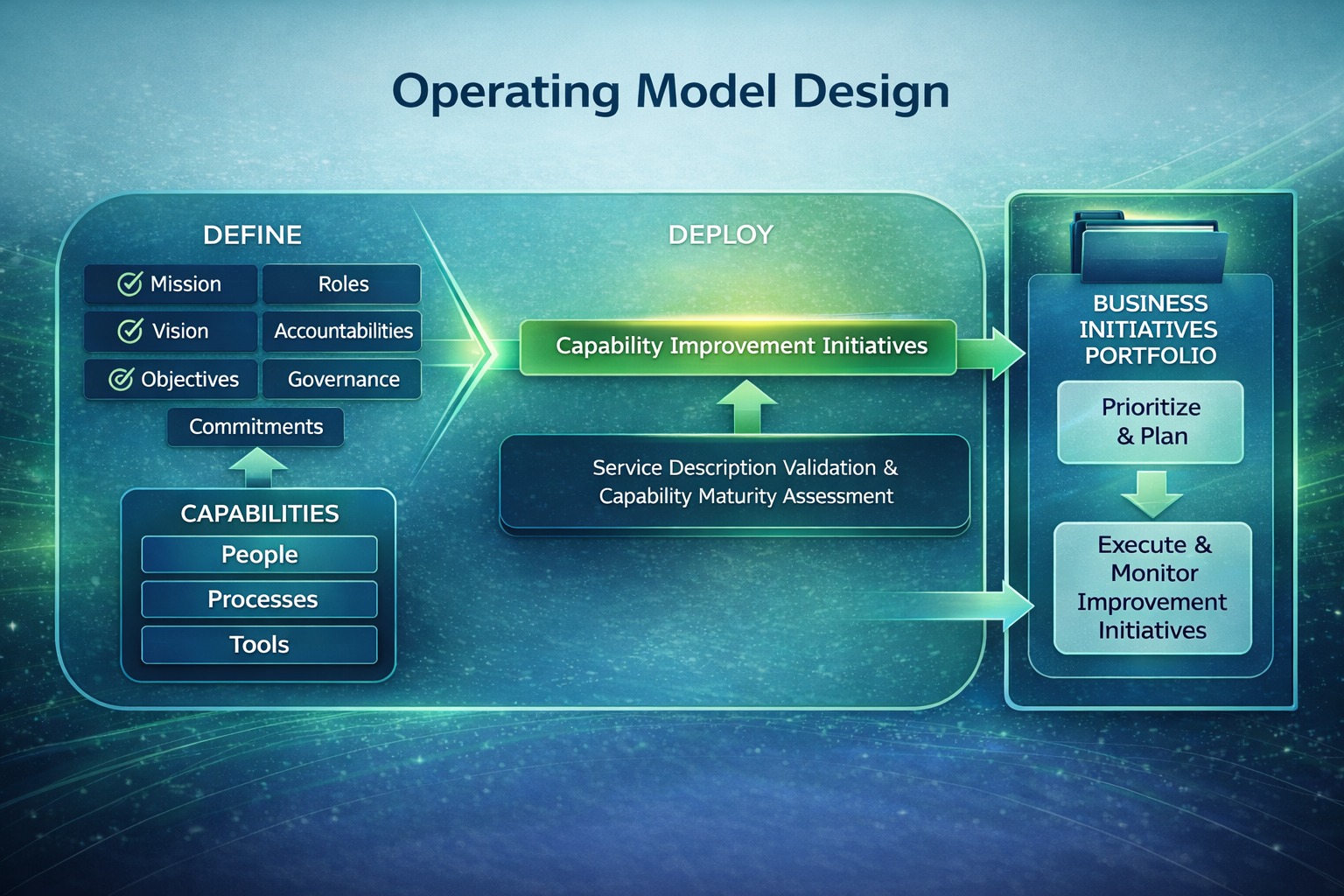
Operating Model Development Framework - Define, Deploy, and Execute

Operating model design from definition to deployment-connecting governance, capabilities, and improvement initiatives.

We apply a structured approach that moves from alignment to activation. We clarify enterprise intent, define governance and service structures, align enabling capabilities, and activate the model through transition planning.

The outcome is an operating model that is understandable, governable, measurable, and executable.

Delivered Through a Structured Execution Approach

Operating model design is embedded directly into execution - aligning structure, governance, and capabilities with how work is delivered in practice.

This is embedded directly into how we deliver operating model transformation.

Ideal For

  • Organizations undergoing enterprise-wide transformation
  • Leadership teams needing clarity on governance and decision rights
  • Shared service or centralized function design
  • Post-merger integration requiring operating model alignment
  • IT modernization programs needing business operating model clarity

Let's Discuss Your Operating Model Challenges

Schedule a confidential conversation to explore how we can help.

Start the Conversation